-transformed.png)
Watamu Vision 2030: Ideas for a Sustainable Watamu

Updated: Jan 29

Watamu Vision 2030 is developed to respond to the specific, most urgent and visible problems Watamu faces today. It is meant as food for thought and a source of ideas to work together to make Watamu, the jewel of the Indian Ocean, a better place. It addresses NGOs, the private sector, local authorities, politicians and individual citizens alike.
Introduction
Watamu’s natural assets—its coral reefs, mangroves, seagrass beds, beaches, coastal forests, and marine migration corridors—are globally significant and form the foundation of its economy. Yet these assets are under increasing pressure.This Vision presents a proposal for concrete actions: among them stricter rules for hotels and construction, zoning, pedestrianisation of Beach Road, limits on non-electric tuk-tuks and motorbikes, waste and smell elimination, fair employment rules, and voluntary tourism-sector contributions to public cleanliness. With this, by 2030, Watamu could be cleaner, quieter, greener, safer, fairer, and firmly established as a high-quality, sustainable tourism destination that benefits local people. A Citizen Assembly is proposed as a voluntary governance mechanism and will only be established if supported by local stakeholders, community organisations, and participating institutions.
What Makes Watamu Special? Watamu is not simply a resort area. It is an ecological system of global importance. The coral reefs protect the coastline and sustain fisheries; the mangroves of Mida Creek store carbon and act as nurseries for marine life; seagrass beds support turtles and fish; and the Arabuko–Sokoke Forest regulates freshwater and climate conditions.Watamu lies within a UNESCO Biosphere Reserve and is recognised internationally as a Key Biodiversity Area. Any activity that damages these systems undermines Watamu’s long-term economic future. Protecting nature is therefore a condition for prosperity, not an obstacle to it.

Why Do We Need a New Vision Now?
Watamu is at a critical turning point. Tourism growth is taking place without sufficient rules, enforcement, or coherent planning, and competing visions for the future are emerging. Some see Watamu as a potential party destination for mass tourism, while others seek to protect its natural beauty, ecological value, and social fabric by attracting fewer, higher-spending visitors. This is not an abstract debate: it goes to the heart of whether Watamu will remain a high-value destination or slide into uncontrolled, low-quality mass tourism.
Many—including some politicians—assume that higher tourist numbers will automatically generate more wealth for the local population. That may be true in some destinations, but it is not necessarily true for Watamu. Growth driven by tourist quantity rather than quality places immediate pressure on fragile ecosystems, limited infrastructure, scarce water and energy resources, and public space that simply cannot absorb mass tourism. In Watamu, the social and environmental costs of this growth are carried by local residents, while the economic benefits are largely captured by a few.
This challenge is intensified by global competition. Watamu is competing with beach destinations around the world at a time of rising airfares and growing economic insecurity, when travellers are increasingly selective about how and where they spend their money. Watamu’s tidal pattern, with extended low tides during most daytime hours, means it cannot compete with destinations such as Zanzibar, the Maldives, Mauritius, Bali, or the Seychelles in terms of continuous swimming and beach activity. As a result, Watamu’s competitiveness depends far more on environmental integrity, tranquillity, exclusivity, safety, and a well-managed public realm than on simply increasing visitor numbers.
In this context, it must be recognised that the tourism sector in Watamu is not homogeneous. Alongside some who promote mass tourism, prioritise short-term income, and are willing to bend or ignore rules, there are many tourism operators, hotel owners, and business people who genuinely and deeply care about Watamu as a place. These actors believe in sustainable tourism, respect environmental limits, support fair employment, and actively contribute to the community and conservation efforts.
Climate change further magnifies these vulnerabilities. It is already damaging Watamu’s coral reefs, marine life, and coastal ecosystems through rising sea temperatures and coral bleaching. Any tourism or development model that ignores this reality actively undermines Watamu’s economy, food security, and long-term future. In a place whose identity and livelihoods are inseparable from healthy marine and coastal ecosystems, climate resilience is not optional.
For some Watamu is paradise on earth. At the same time, many residents experience Watamu as a place where rules do not apply equally, administration is weak, and political leadership prioritises short-term interests over long-term responsibility. Watamu’s core problem is therefore not tourism itself, but unmanaged tourism combined with weak governance. Development has taken place without clear environmental standards, noise limits, traffic planning, or fair employment requirements, while poor enforcement of existing laws, corruption, and lack of coordination have normalised pollution, excessive noise, traffic congestion, and declining quality of life.

This reality is illustrated by a series of development ideas that can only be described as reckless, if not crazy, in the context of Watamu’s ecological and social conditions. Projects driven by short-term profit, pushed through in open disregard of planning logic, environmental sensitivity, and community wellbeing, have been enabled by weak oversight and self-serving alliances between investors, political actors, and private interests. Proposals such as the Palm Exotica project, the developments at Chief Corner, and even the suggestion of a nuclear power plant near Mida Creek are fundamentally incompatible with Watamu’s values, its biosphere status, and any credible vision of sustainable development. Even developments often presented as positive, such as the opening of Carrefour in Watamu, took place without prior public notice, consultation, or assessment of impacts on neighbors, while the presence of two petrol stations in the very centre of Watamu raises serious questions about long-term tourism quality, safety, and spatial planning, given that they increase traffic, create smell, and are usually not part of an attractive town center.
The social consequences are equally visible. Tourism wealth remains highly concentrated among a small group of investors and operators, while most residents depend on seasonal, low-paid, and insecure work. Despite a most likely high turn over of funds in Watamu, the county and local authorities responsible for Watamu lack any funds to address many of the problems mentioned here that hould normally be solved by local authorities.
Youth and many women face limited access to education, skills development, and stable employment, contributing to drug use, informal survival strategies, exploitation, and social insecurity. Gender inequality continues to affect women disproportionately, both economically and socially.
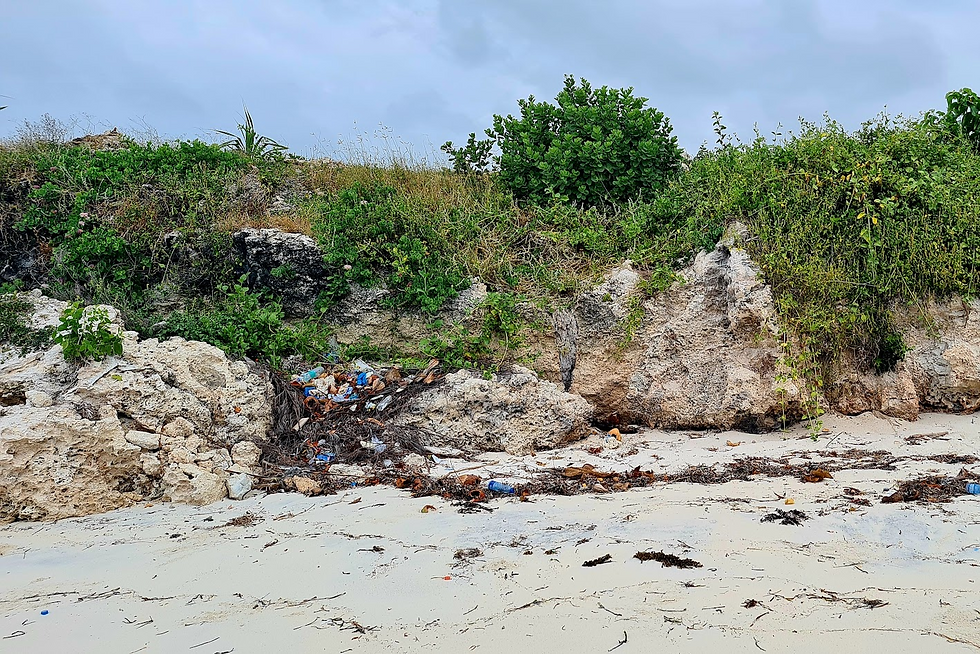
Watamu today faces a dense web of interlinked challenges: unregulated construction of hotels, villas, shopping centres, and informal street-front businesses; severe noise pollution from nightlife, generators, traffic, faith-based activities, and poorly regulated enterprises; traffic congestion in the town centre due to weak enforcement and the lack of pedestrian-friendly public space; poor waste management causing pollution and bad smells; water scarcity and unsustainable water use; and frequent electricity outages caused by weak infrastructure and rising demand. These pressures are compounded by weak rule of law, corruption, ineffective policing, and worrying indications of organized crime structures, all aggravated by the absence of long-term planning and accountability.
My vision for Watamu is a place where natural ecosystems are protected and public spaces are clean, safe, and well cared for. Watamu should be known for high-quality, sustainable tourism rather than mass tourism, with clear and consistently enforced rules for development, noise control, and mobility. Public spaces should be quiet, orderly, and welcoming for residents and visitors alike, reflecting respect for both people and nature.
This vision also places people at its centre. Tourism should create decent jobs and fair economic opportunities for local residents, with real prospects for youth and women through education, skills development, and stable employment. Decisions about Watamu’s future should be made transparently and with meaningful community involvement, ensuring that development serves the common good and strengthens trust, social cohesion, and long-term prosperity.
Ideas to Improve and Save Watamu
The following ideas are proposed as concrete and realistic steps to address Watamu’s most urgent challenges. They are not meant as abstract policy goals, but as practical measures that can be discussed, prioritised, and implemented step by step by local authorities, businesses, civil society, and the community.
Taken together, these ideas aim to restore order, protect Watamu’s natural and social assets, and shift tourism development towards quality, sustainability, and fairness. They reflect the specific conditions of Watamu—its ecological sensitivity, limited infrastructure, governance challenges, and dependence on tourism—and are designed to improve daily life for residents while safeguarding Watamu’s long-term attractiveness as a destination.
1. Governance, Rule of Law & Integrity
Objective: Restore trust, fairness, and accountability.
Declare Watamu a Corruption-Free Zone with transparent permitting and public notice boards.
Strengthen enforcement capacity of local authorities and police.
Execute penalties for violations related to noise, waste, construction, and environmental damage, in line with applicable legislation.
Reduce criminality through strict enforcement of laws and regulations, prevention, lighting, CCTV cameras, patrols, youth engagement, and cooperation.
2. Regulated & Responsible Development
Objective: Stop uncontrolled building and protect quality of life.
Introduce strict development rules for hotels and tourism facilities.
Enforce zoning regulations, placing noisy activities away from residential areas.
Implement a moratorium on corrugated iron street-front constructions.
Introduce Shopfront beautification and cleanliness obligations.
3. Attractive, Clean, Green & Healthy Watamu
Objective: Eliminate pollution, smells, environmental degradation, and overheating due to climate change.
Implement a Waste-Free Watamu programme.
Upgrade waste, sewage, and drainage systems to eliminate bad smells.
Voluntary additional tourism-sector contributions for street and beach cleaning.
Start Large-scale tree planting and dust-control measures.
Avoid heat islands by planting trees or by creating shaded parking areas (e.g., from solar cells) at heat islands such as Blue Moon Mall, Watamu Mall, or Carrefour.
Inititate beautification of Watamu Old Town by developing it into an area that is safe and attractive for tourists, e.g., paving streets, painting and repairing buildings, street lighting, new shops.
Start reforestation of Chief Corner and consider the establishment of a Tourist Information Centre, an Office of the Tourist Police, a Huduma House, a playground, and spaces for NGOs such as WA, WAC, and others.
Create an attractive entry into Watamu by applying special rules along the street front of the Gede–Watamu road from Total Gas Station to the T-junction: no corrugated iron constructions, no storage of goods (e.g., building materials) on the roadside, and stabilisation of sandy patches.
Introduce more responsibility for shop owners; Involve shop owners in keeping the areas in front their shops, bar, eatery etc. clean instead of making this a community task, by introducing a culture of taking responsibility and of pride.
Create an annual “Best Shopfront in Watamu” award to celebrate businesses that contribute positively to the town’s appearance.
4. Mobility, Noise & Public Space
Objective: Reduce traffic, noise, and heat while improving livability.
Converse Beach Road into a pedestrian zone, with only limited traffic allowed for loading of goods and for residents and shopkeepers, otherwise a TukTuk and Boda Boda free zone.
Limit non-electric motorbikes and tuk-tuks; incentivise electric alternatives.
Assign mandatory parking spaces for Taxis, Boda Bodas and TukTuks, shaded and with electric charging stations, solar powered.
Stricter control of Boda Bodas, TukTuks, and others (insurance, roadworthiness, driving licence, adherence to traffic regulations, drug tests of drivers) .
Introduce a a label “Safe Ride Watamu” issued to boda bodas and tuk-tuks that follow minimum standards for roadworthiness and driving safety.
Start main-road (Jakaranda Road to Short Beach) shuttle service with fixed stops, free or at low prices.
Build walkways and bicycle lanes along Jakaranda Road into the centre of Watamu and along Turtle Bay Road, allowing citizens and tourists to walk and cycle safely and easily in Watamu.
5. Sustainable Tourism & Blue Economy
Objective: Make Watamu a model for sustainable coastal tourism.
Participatory develop a Code of Conduct for hotels and guesthouses.
Promote Blue Economy activities and marine conservation.
Raise awareness about measures for water-saving, energy efficiency, and solar.
6. Inclusive Economy & Social Pact
Objective: Ensure locals benefit fairly from tourism.
Establish a Social Pact guaranteeing fair employment and local sourcing.
Promote recycling and upcycling enterprises.
Support women’s economic empowerment, including by involving them in upcycling projects.
Prevent and reduce drug use and prostitution through alternatives.
7. Public Health as a Core Priority
Objective: Make public health a central pillar of Watamu’s development by protecting clean water, clean air, safe food, quiet living conditions, and healthy public spaces.
Clean Environment = Public Health: Treat waste management, sewage control, water quality, dust reduction, and elimination of bad smells as primary public health responsibilities, not only environmental issues.
Noise and Traffic as Health Risks: Address excessive noise and traffic congestion as direct threats to physical and mental health through zoning, enforcement, pedestrian areas, and mobility controls.
Safe Food and Markets: Guarantee food safety and hygiene by enforcing standards and prioritising the establishment of the new Fish Hall at the newly constructed market hall, and ensuring clean market facilities through regular checks.
Prevention of Drug Abuse and Social Health Risks: Make drug prevention, early intervention, and access to treatment a public health priority, particularly for youth, alongside measures to reduce sexual exploitation and related health risks.
Proposal: Ten Concrete Priority Actions to Achieve a Better Watamu by 2030
The following ten community-based initiatives are proposed to be launched and implemented by 2030. They are based on the areas described above. While they will not solve all of Watamu’s challenges, they are intended to act as catalysts, creating a strong pull factor and stimulating further initiatives by citizens, businesses, and authorities.
1. Campaign: ”Safe and Corruption-Free Watamu”
This initiative aims to ensure that the rule of law is applied consistently in Watamu. Activities may include:
Installing visible “Corruption-Free Zone” signposts with clear contact information for reporting corruption
Establishing a reporting office at Chief’s Corner for corruption-related complaints
Training programmes for police officers and enforcement staff, in cooperation with WAC and other partners
2. Citizens Contribution to a Watamu Spatial Development Plan
This initiative aims to develop a grassroot proposal for a clear spatial development plan for Watamu, including proposals for defining zones for:
Tourism and business activities
Residential areas
Public and community spaces
Special emphasis will be placed on ensuring that potentially noisy establishments are located far from residential zones and that future development follows clear, enforceable rules.
3. Campaign: “Waste-Free Watamu”
This initiative focuses on preventing and managing waste through coordinated action, including:
Public awareness campaigns such as “Only a Clean Watamu Can Be a Wealthy Watamu”
Training programmes, especially for women, in upcycling and recycling to generate income while reducing waste
Close cooperation with the municipality on waste collection points and systems
Engagement with shop owners to ensure cleanliness of areas in front of their premises
4. Restoration of Chief Corner
Actions under this initiative include:
· Reforestation and tree planting
· Promoting the construction of community-oriented buildings that improve safety, support tourism, and serve public needs
5. Beautification of Beach Road
This initiative promotes the conversion of Beach Road into a pedestrian-friendly area that:
Is attractive, safe, and shaded
Becomes a magnet for visitors
Creates income opportunities for local businesses
In doing so, it will be ensured that all activities comply strictly with existing laws, particularly noise regulations.
6. Code of Conduct for the Tourism Sector
A working group consisting of experts, hotel owners, guesthouse operators, and other stakeholders will develop a Code of Conduct for Sustainable Tourism in Watamu, covering issues such as:
Noise
Waste
Water and energy use
Environmental responsibility
Ecofriendly building
7. “Safe Ride Watamu” Label
This initiative introduces a “Safe Ride Watamu” certification for boda bodas and tuk-tuks that meet safety, insurance, licensing, and roadworthiness standards. Certified drivers may wear identifiable garments, display official stickers on their vehicles, and be promoted by hotels and businesses as Watamu-recommended transport. In this context it will be attempted to cooperate with UBER and BOLD.
8. Noise-Free Watamu
Building on existing efforts, this initiative strengthens the fight against noise pollution through:
Strategic and exemplary legal action against major noise offenders
Legal action against officials who fail to enforce existing noise regulations
9. Voluntary Code of Conduct for Fair Employment and Local Sourcing
In cooperation with workers, trade unions, and responsible employers, this initiative develops a voluntary code of conduct aimed at:
Improving working conditions
Promoting fair wages
Encouraging local sourcing and employment
10. Women Empowerment
This initiative promotes women’s empowerment through increased participation in decision-making. Concrete actions will include
Skills development and training programs
Income-generating activities and entrepreneurship, including in the waste sector
Implementation Arrangements: Governance and Oversight: The Watamu Citizen Assembly
Implementation of the Vision could be overseen by a Citizen Assembly of approximately 12–15 members, representing communities, youth, women, NGOs, environmental actors, tourism businesses, and local commerce. The Assembly monitors progress, provides guidance, and reports publicly. The Citizen Assembly will be established by a local NGO such as the Watamu Association or any other NGO that is willing to take a lead in saving Watamu.
The Role of Local Authorities
Local authorities play a central role in planning, regulation, enforcement, and service provision, and many of the challenges facing Watamu formally fall within their mandate. In practice, however, local authorities currently have only a limited ability to address these challenges effectively. Chronic shortages of financial resources, limited technical capacity, lack of planning tools, insufficient data, and in some cases limited institutional interest or continuity severely constrain their ability to act. As a result, even where laws and regulations exist, enforcement and implementation remain weak.
Given these constraints, Watamu Vision 2030 does not assume that local authorities can lead or finance the necessary changes on their own. Instead, it proposes a strong grassroots and community-driven approach that mobilises citizens, businesses, civil society organisations, and the tourism sector to initiate action where public capacity is insufficient. This approach is not intended to replace public authority, but to respond pragmatically to current realities and to prevent further degradation while institutional capacity remains limited.
At the same time, local authorities are essential partners in the Vision’s implementation. Many proposed actions—particularly those related to planning, zoning, public health, mobility, enforcement, and public space—touch directly on their legal responsibilities. Cooperation with county and local authorities is therefore not only welcome but necessary to ensure legality, coordination, and long-term sustainability. Wherever possible, the Vision seeks to support and complement public institutions, build capacity, and create conditions under which local authorities can progressively reassert their role in guiding Watamu’s development
Financing of Watamu Vision 2030
The implementation of Watamu Vision 2030 depends on shared responsibility and realistic financing approaches adapted to Watamu’s context. Given limited public resources, the Vision is not based on large external funding but on mobilising local capacities, cooperation, and targeted contributions. A detailed cost estimate can only be developed once a decision on possible actions is taken. Where legally possible, measures should be anchored in existing legislation. Where this is not feasible, voluntary agreements and sector commitments are proposed as interim solutions.
A significant part of implementation can be achieved through in-kind contributions, including time, expertise, services, materials, and facilities provided by local authorities, NGOs, businesses, professionals, and community members. These contributions support activities such as planning, enforcement, clean-up actions, tree planting, training, awareness campaigns, and monitoring, while strengthening local ownership.
The tourism sector has a special responsibility, as it benefits directly from Watamu’s natural assets and public spaces. Hotels, guesthouses, restaurants, and tourism operators can contribute through voluntary financial contributions and in-kind support for street and beach cleaning, waste management, tree planting, mobility solutions, and public infrastructure. Such contributions should be seen as investments in Watamu’s quality, reputation, and long-term competitiveness.
Additional support can come from voluntary contributions and donations by local businesses, property owners, and individuals, including those with greater financial capacity. NGOs and community organisations play a key role in implementation through their expertise, networks, and ability to deliver projects in areas such as environmental protection, public health, and social inclusion.
To ensure transparency, fairness, and effectiveness, these contributions need to be organised through a more detailed financing and implementation plan. This plan should define priorities, estimate costs, clarify responsibilities, and establish clear rules for managing and reporting funds, ensuring that Watamu Vision 2030 moves from intention to action.
Overall Outcome by 2030
By 2030, Watamu aims to be cleaner, quieter, greener, safer, better organised, fairer for local residents, and recognised as a leading example of sustainable tourism and blue economy development in East Africa.

Comments